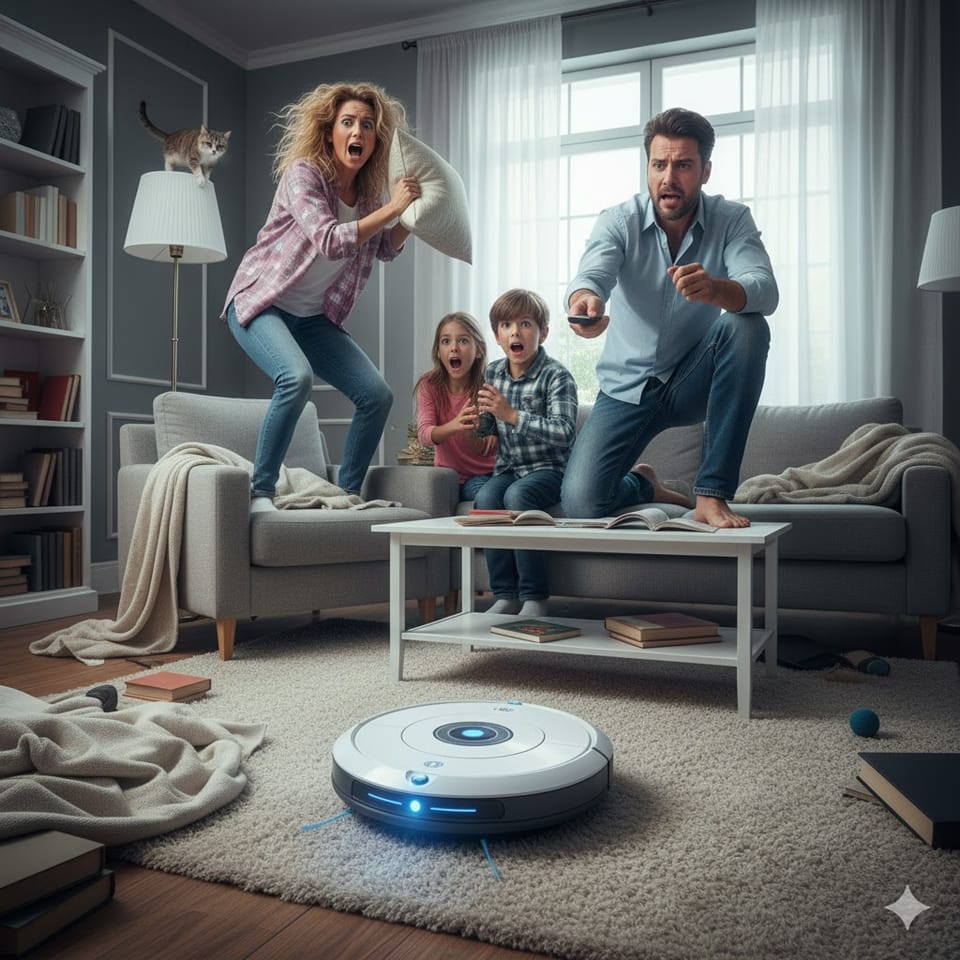
Harishankar has a terrific write up about a Smart Vacuum. His curiosity turned into quite the revelation. It is always fun when someone uses their skills to learn and share with others. So, what do all of the “smart” IOT devices in your home do? Here is the story of one such device.
This is definitely worth a read.
It all started innocently enough.
As these things often do. We frequently learn quite a bit not by being intentional, but being curious.
I decided to monitor its network traffic, as I would with any so-called smart device.
We may guess as to what is being sent, but with a little bit of skill, we can know.
I noticed a steady stream of packets being sent to servers located halfway across the world. My robot vacuum was constantly communicating with its manufacturer, transmitting logs and telemetry that I had never consented to share.
For a few days, everything seemed fine. It continued to clean, map, and obediently avoid the furniture. However, one morning, it failed to power on.
Coincidence?
I sent it for repair. The service center assured me, “It works perfectly here, sir.” They sent it back, and—miraculously—it worked again for a few days. Then, it died once more.
This became a surreal cycle:
- I shipped the robot off.
- They “fixed” it.
- It worked briefly.
- It died again.
I began to feel like I was losing my mind. How could a simple IP block disable a vacuum cleaner that is supposed to work offline as well?
Then, one day, the service center refused further service.
“Out of warranty, sir.”
Once it is out of warranty, with nothing to lose, a complete disassembly and review take place. It is well worth the read to learn about what a smart vacuum does.
In the end, he provides a completely documented experience and a github repo.
The Day My Smart Vacuum Turned Against Me
 Share this post on social media.
 ♻️
Miguel Guhlin
♻️
Miguel Guhlin