Enjoy a quick interactive on the IEP process. As you complete each step, the next step will open.
[h5p id=”1″]
Educator, Thinker, Consultant
Enjoy a quick interactive on the IEP process. As you complete each step, the next step will open.
[h5p id=”1″]
I’m currently taking a class for certification renewal. One of the assignments is to create a Digital Learning A-Z guide.
“Your goal is to create a digital guide of course learning of
Federal and Maine School Law. This would be an A-Z guide that demonstrates your thorough understanding of what you have learned in this class with reading, handouts, discussion, etc.”“As you develop your ideas and pull this project together,
imagine you would be presenting this A-Z guide to peers for a professional workshop in a power point fashion for a
training.”
Specifics to include:
- Icebreaker activity at the beginning.
- In the middle, an interactive component, with a brief game or role play experience.
- Embed one video
- Incorporate font size that is conductive to an audience.
This just screams bad presentation skills. Creating a PowerPoint presentation is going to end up with tons of words on each slide. I regularly watch presentations that are really speaker notes. I see presentations with literally paragraphs of text.
This is not how I give presentations. I generally use an image to help ground what I’m talking about. In some instances, I use a limited number of words (usually three unless names are involved).
I want to pass the class. I also kind of want to just put all the information into the Speaker Notes section, add a relevant image, and explain that this is how I present information.
I’m working on my Fall ACTEM presentation. The presentation is on “Choose Your Own Adventure: Create An Adventure for Your Students”. Specifically, how you can create these for students. Or, better yet, how students can create these.
While working in Twine (I wrote about Twine previously), I wrote some things in Markdown. Since Twine doesn’t have a “viewer” window, pure text is what you see. I didn’t really expect Twine to display the markdown correctly, I was just entering it as a to way to remind myself to go back and format the text.
However, I clicked the “Test From Here” button, essentially a “preview” button, and lo and behold, Twine does display markdown as proper HTML.
Now, I know that I can use Twine while writing in Markdown. Yea!
Living close to the Atlantic, water was going to be an easy assignment. I headed out and took some shots of boats, a lighthouse, and more. While I was shooting, I captured the tide coming in and out. I was surprised at the clarity of the ridges (terraces) formed by the tide.

I love the serendipity of finding this structure in the tide.
I also considered a couple of other images as my submission.
(the potential title was worth considering for submission)

I also liked the feeling and the seaweed on the rock of this one.
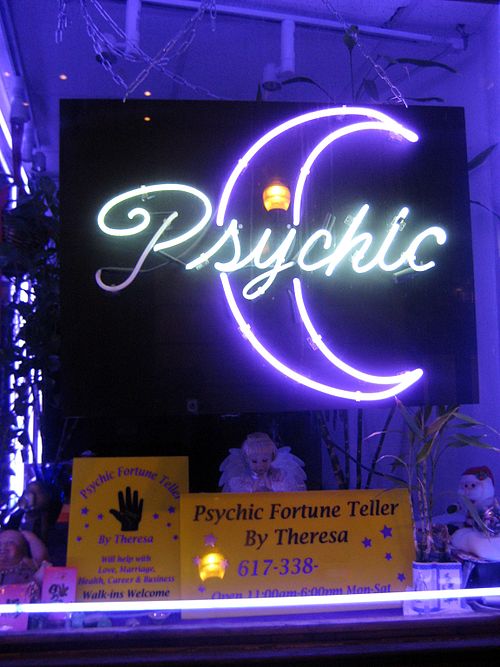
Baldur Bjarnason has a fascinating write-up entitled “The LLMentalist Effect: how chat-based Large Language Models replicate the mechanisms of a psychic’s con“.
Essentially, Baldur Bjarnason makes the observation that LLM’s frequently end up following the same path those that do “cold reading”. He notes that many people are becoming convinced that language models are intelligent. There is no reason to believe this, but he offers two possibilities:
- The tech industry has accidentally invented the initial stages a completely new kind of mind, based on completely unknown principles, using completely unknown processes that have no parallel in the biological world.
- The intelligence illusion is in the mind of the user and not in the LLM itself.
He falls squarely in the second camp. I love the way that he clearly lays out the reasoning. He describes, quite clearly, how cold reading works. Then he mirrors those same steps in how an LLM works. He not only lists the areas, but goes on to provide examples and further clarification.
For example, in a cold read situation, the first issue is that the “Audience Selects Itself”.
Most people aren’t interested in psychics or the like, so the initial audience pool is already generally more open-minded and less critical than the population in general.
The first issue in LLM’s as a Mentalist? The Audience Selects Itself.
People sceptical about “AI” chatbots are less likely to use them. Those who actively don’t disbelieve the possibility of chatbot “intelligence” won’t get pulled in by the bot. The most active audience will be early adopters, tech enthusiasts, and genuine believers in AGI who will all generally be less critical and more open-minded.
This is a fantastic read and well worth your time.
BlueSky seems to have picked up a good bit of traction. There are lots of differing opinions on BlueSky where it fits, it’s future, and whether to support it or not.
I’m going to look at BlueSky mostly from an educator’s perspective.
Lots of people left Twitter, er X (no link intentionally). Twitter was at one point a very useful platform. Originally, it was terrific to be at a conference and follow a hashtag to know what was going on. Twitter also allowed teachers to share links, ideas, successes, and concerns. It was a place to make connections.
However, once Elon Musk purchased Twitter, a quick decline occurred. Twitter had been suffering from trying to figure out how to navigate external pressures (how do you handle it when a powerful person tells blatant lies?) and revenue issues. Twitter had tried a variety ways to fund their operations (external apps allowed?, not allowed?)
With Twitter becoming a toxic site, people started looking for alternatives. BlueSky had been funded prior to Musk purchasing Twitter. BlueSky was designed to be an open-source component of Twitter.
BlueSky was one option, Mastodon another. Mastodon is truly federated. There is no single owner (currently the originator of Mastodon has a lot of influence, but it is not the same thing as an owner; plus Mastodon is working toward being a fully non-profit, independent organization). Being federated means that there are many different sites that can operate independently while being voluntarily connected. If there are branches that promote things you don’t like, you can block them and never see them. There is real power in federation. There isn’t really a monetary model for Mastodon, it relies on voluntary payments or passion projects.
I tried to move to Mastodon in 2018. I loved the open-source nature of the platform. However, Mastodon in 2018 was a bit confusing. There was a bit of a learning curve. Most importantly, there were no teachers, no educators there (at least that I could find).
BlueSky skyrocketed following Musk’s purchase of Twitter. Although they claim that they will be federated, instead of utilizing an already existing protocol, they are creating a new one. The new protocol is still being developed, thus BlueSky is not currently federated.
BlueSky has been adopted by a good number of teachers. BlueSky has done some smart things. There are starter packs, which makes it easy to follow a group of accounts. I even saw a newscaster use their BlueSky account in their chevron the other day.
So, I’m trying to read the tea leaves for the future. BlueSky is the closest experience to the old Twitter. It is still very much centralized. That centralization creates an easier, smoother experience for users.
Several leaders who I follow have provided differing opinions on BlueSky.
So, who will be the winner? It’ll be interesting to see. I still don’t see educators moving to Mastodon. I don’t anticipate that they will be soon. Open-source still has too much “need to learn” and less than pretty involved. There are just too many speedbumps for educators to fully embrace Mastodon. BlueSky has the mind share right now. It is very centralized and very close to how Twitter used to work. The question is in part, will BlueSky truly federate? Will BlueSky end up being controlled by a small number (or one) of individuals? We won’t know the answers until we know the answers. At that point, it may be too late. We may have just exchanged one bad situation for exactly the same thing.
So, I downloaded the desktop version of Twine.
Awesome.
It appears to be very easy to use (especially if you’ve ever done anything with a wiki). Essentially, Twine allows you to create “stories”.
Twine is an open-source tool for telling interactive, nonlinear stories.
You don’t need to write any code to create a simple story with Twine, but you can extend your stories with variables, conditional logic, images, CSS, and JavaScript when you’re ready.
Then you can easily “Publish to File”.
Nice.
You can decide where to save the file. Double clicking the file opens the story in a web browser.
Cool.
Now I want to share it with a group.
Hm.
According to the documentation, I can email the file to others. That’s…interesting. But what I want to do is to embed the file in a web page. Ah, there’s a WordPress plugin.
Great.
However, the plugin is no longer available due to “security concerns”.
Think, Think, Think.
The resulting file is just an HTML file. I have a website. What if I post the HTML file on my website?
Let’s fire up the website and see what happens.
Ta-Da!
It works as expected. Now this is super basic as I spent about 30 seconds creating a couple of pages, but it does seem to work.
So, I could create a “Choose Your Own Adventure” presentation/PD experience.
Now I need to understand why I would use this instead H5P and with the Branching Scenario.
It is nice to have choices though.
My “weekly” update is frequently not weekly. This time, it’s not really my fault. I spent nine days in the hospital as it appears that I have outlived myself (at least my gallbladder). The ordeal lasted a couple of weeks as the original diagnosis was not gallbladder removal. I learned that I apparently have a decent pain threshold.
Anyway, I’m on the road to recovery now. I’m still very tired and working on rebuilding my strength and stamina. Appreciate good health if you’ve got it.
A special shout-out to Dr. Doug Belshaw. His blog, Doug Belshaw has been an inspiration for me. The whole concept of a “weekly update” was stolen directly from him. I like to think of him as a friend, even though we’ve only met in real life once (and I’m absolutely positive he wouldn’t remember that). But I’d like to think that we could tip a pint and discuss various topics were we closer in geographic proximity.
Doug has shared his journey through life, including health and employment. I’ve benefitted from his thoughts. My site is pretty much just for me, but I do appreciate Mr. Belshaw.
I’ve been cleared to return to work this week. We’ll see how it goes as I was also informed that I may need to take naps during the day. The week was productive at work. I ended up working three days in the office and two days from home. On Monday I worked from home to see how I would tolerate a regular time schedule. That went well, so Tuesday through Thursday was in the office. I found meetings of two hours a bit tiring, but manageable. On Friday, I had a Doctor follow-up and a couple of online meetings. It didn’t seem productive to go in, so working from home it was.
Our Podcast, Middle School Matters was one of our shortest shows ever. My energy level was low. Since I’ve been laid up for a couple of weeks, I didn’t have lots of new stuff to contribute.
However, we are the number two middle school podcast on Podfeed.
The last show (March 29th), was a traditional show for us. I had much more energy and resources to contribute.
I’ll be taking it easy for a few more weeks. Occassional naps, rest built-in to the day, no lifting, and generally accepting that I can’t do everything that I want. Hopefully, this all ends up resulting in a full recovery and I can then start an exercise program to rebuild strength.
I did purchase a new lens. I picked up a Sigma 150-600mm telephoto lens. I’ve only made it out once to take a few test shots. I like the lens a ton, but I’m going to need some practice to get the most out of it.
I recently read an article by Dan Sinker entitled “What Felt Impossible Became Possible“. This is a good article to remind us of the history of the United States, ok, a portion of the history of the United States.
Dan Sinker is writing about the KKK in the 1920’s. Most people do not realize how prevalent the KKK was.
It’s not a history you learn about in school—we were whitewashing history long before the current executive orders—but the Klan in the ’20s was everywhere. There will millions of Klan members across the country. People joined it like they were joining a golf club or the Elks Lodge. There was a women’s auxiliary. There was the Ku Klux Kiddies, for children.
See, the KKK wasn’t some fringe group. The KKK was fully embedded into American culture. Some think that the KKK was just a few white men in the south.
Once you start learning about the KKK, you may see a few familiar points.
The Klan of the ’20s was a little different than what you might think of now. They didn’t just hate Black people (though, obviously, anti-Blackness was a central driver), they also went hard after immigrants, Jews, and Catholics too. The Klan’s slogan at the time? “America First.”
A big part of the story is the experience of George Dale from Muncie Indiana. George Dale “hated the Ku Klux Klan”. And the KKK was powerful in Muncie, Indiana at that time. Hating the KKK was not a safe thing to do. There was a ton of “proactive compliance”, after all, you never really knew for sure who was in the KKK (there is a reason for the white hoods). Hm, proactive compliance to avoid possible repercussions, does that sound familiar?
George Dale also ran a newspaper. So, he published the names (see page 1) of some of the Klansman. George suffered physically and economically. The KKK tried to kill him. His business lost advertisers and customers. However, George never gave up.
It nearly got him killed, when hooded men broke into his house and tried to shoot him. Dale said that he wrestled the gun away and killed one of them instead.
And hating the Klan sent him to jail repeatedly, rounded up by the Klan cops and put in front of a Klan judge with a Klan-packed jury. It was reported at the time that he was sent to the Muncie jail so often that inmates would applaud when he’d return.
His letter from 1927 lays out what happened.

There is good news.
And I think about people like George Dale—there were many like him—who, despite it feeling impossible, and despite paying incredible personal cost, kept fighting anyway.
And they won.
Two years after the letter, George Dale became Mayor of Muncie. He fired all of the cops and stripped Muncie of Klan members.
This tracks with my deeper learning and understanding of history. I attended a terrific college, Go Blue!, with a minor in history. However, I have learned so much history via reading after graduation. There is just so history that isn’t taught, even at the finest of fine collegiate institutions. The problem really is that by not teaching a full accounting of history, heck, even a balanced accounting, we truly do present people with a really bad, inaccurate background to base understandings.
America has always been more of an idea to shoot for rather than an accomplishment. However, we have tended to teach and act like America has reached those goals and is a shining example of them. Although our Founding Fathers stated that “all men are created equal”, they owned slaves. The Founding Fathers clearly didn’t act like all men were created equal. Naturally, we can discuss whether “men” meant mankind (i.e. included women) or white men who owned property.
One of the biggest areas that I had to learn about on my own was Eugenics (kind of surprised that this website hasn’t been shut down by those in power, so I’ll also link to the Internet Archive version as well). Unfortunately, these beliefs are making a comeback.
Recently, we took our first cruise. We decided on the Treasures of the Danube by Viking Cruise.
We selected the river cruise by Viking as there were several things that struck us as positives:
Viking is really good at providing an organized experience. We were met at the Budapest Airport and shuttled back to the boat. The boat has plenty of common space. The food was terrific. Breakfast has a buffet with lots of options. There is an omelet station (plus, you can get an egg cooked at over easy). Lunch has a bunch of variety (every meal has three courses, but we quickly just got a salad or soup for lunch). Dinner included three options, local, regional, and classic. We mostly choose the local option. (The classic option is a consistent set of choices, salmon, steak, or a salad as the main entree).
The rooms are extremely small. Good for sleeping, but that’s about it. However, we had no trouble finding a spot in the common spaces to read, crochet, or just hang out.
Our days were filled but not overfilled. There were things to do and times to relax.
This was a travel day. Our travel took us from Portland, ME to Chicago, IL. Then the long flight to Munich, Germany. Finally, the short flight to Budapest.
We were able to grab some sleep on the flight from Chicago to Munich. The plane was definitely not full. People generally spread out to take their own row.
Munich quickly became Rm’s favorite airport as it was quiet and well organized. It was also very simple and straightforward.
Arrival in Budapest. We got to see a few sights but mostly got settled in on the boat. Budapest at night provides some terrific scenes.

We explored a bit of Budapest today. We started with the “Panoramic Budapest” excursion. This involved a bus trip around some of the scenic sites of Budapest. There was a bit of walking around the Palace as well.
Budapest is a combination of two cities, Buda and Pest. The Pest side was originally the home of the working class.
Later in the afternoon, we took a walk around Budapest. Specifically, we walked over to a shopping area and then the downtown. Budapest Central Market Hall was a great place to visit. This is a large building filled with stalls for vendors. There are a large number of meat markets and vegetable stands. Naturally, there are also some touristy stalls as well. There are a variety of food vendors that seem to be popular with some local workers in addition to the tourists.
Next we took a walk down the famous Váci Street -(Váci utca) to get a sense of place and check out the shopping. My favorite spot on this was probably the local mini-mart. It is always interesting to see what foods and items are stocked.

In the early evening, I took a quick walk along the Green Bridge to take some pictures.
Our second day was spent in Gyor, Hungary. Gyor was filled with cobblestone streets and interesting architecture. There was a book mobile on the street that distributes books.

The morning was a beautiful, but somewhat chilly, morning sailing to Gyor. This was one of the few times that we sailed during the day. The view was wonderful.
Bratislava, Slovakia is the largest city in Slovakia. It was interesting to note how the guide noted that “if there had been a vote, the people probably would not have voted for independence”. Bratislava was part of the Habsburg monarchy, then had some independence (part of the Czechoslovak state), then was part of the Soviet Union, then part of Czechoslovakia, and now part of the Slovak Republic. It was interesting to listen to how the citizens felt about all the changes.
Bratislava largely has three main languages that are used daily, the local dialect, German, and English.
Bratislava has some wonderful architecture. This is interrupted at times by buildings constructed during Soviet rule.
In the morning we participated in the Bratislava Walking Tour. This was not our favorite guide. He seemed to have a terrific background, but didn’t have the “guide flair”. He also seemed at times to make up things when he didn’t know (and not convincingly).

I took an additional walk up to the castle during the afternoon to grab some pictures. Pet peeve: directions that basically require you to already know where you are going. However, I made it to the castle and got some photos.
In the evening, we went on a Bratislava Beer Tasting & Dinner. The guide for this was terrific. We wandered over to the restaurant and enjoyed dinner and a couple of beers. Dinner was pretty familiar as my wonderful wife has made most of those dishes. The beer was good, but was a lager and pretty light. The “dark” beer was a light lager as well. It was a fun evening.
The first day in Vienna started with a Panoramic Tour. We took a bus to the main historic area. From there, we were off on a walk around Vienna. There were tons of things to see around Vienna. We enjoyed the walk and this prepared us for returning the next day.

In the evening, we headed back to the city for a concert. Rm looked lovely, (we were dressed up while not everyone else was). The Vienna Residence Orchestra played at The Daun-Kinsky Palace. It was a beautiful setting, with wonderful musicians. The room was actually quite small. This was not an extremely large room or theater. Rather, this was a smaller room that would be much like a concert would have been enjoyed. I would estimate that there were about 100 audience members.
The concert focused on Mozart and Strauss. Specifically, Strauss’ waltzes and some selections from Mozart’s The Magic Flute.
There was a short break in the middle, with a free glass of wine (which we passed on).
This was definitely one of the highlights of the trip. This was a wonderful experience which is hard to explain in words.
Day 2 in Vienna was an “on our own” day. We grabbed the subway from the riverfront to the central city. We had a great chance to wander around. We ended up buying some cheese and some candies.
Naturally, we had to have a bit of coffee in Vienna.
We ended up taking a horse-drawn carriage around as well. This was a neat experience, even though we mostly went around the same buildings that we had walked around.
The morning started with our second sailing during the morning. The scenic sailing was very enjoyable. This also included going through some locks.

Upon arriving at Grein, we headed to the included walk. Grein is a small area. However, we enjoyed a concert at the local historic theater. The historic theater was quite historic. This is a small theater with tight seating. We enjoyed a concert that would’ve been presented in medieval times. There were two performers who used a couple of instruments.
Next, we took a bus to the historic castle. The castle is owned by the aristocratic House of Saxe-Coburg and Gotha. When I think of a castle, this was pretty much the vision that I have. There was an open square with walkways around several levels. This also included the “diamond room” and a bath area.
The Hills are Alive…Salzburg and Mondsee are well known as the setting for the Sound of Music.

The bus ride was a little over an hour from Linz to Mondsee. Mondsee included a wonderful church. (By the way, there were lots of wonderful churches throughout the entire trip.) Mondsee was also the location of where the kids in the Sound of Music hung from the trees.
The backdrop of the Alps was stirring. There were several buildings of various colors. We learned that the colors were used historically to indicate what profession occupied the house. Yellow was royalty. Blue was a profession (varied by town).
Next was a short trip to Salzburg. Salzburg includes the fountain from the Sound of Music. There were lots of beautiful areas and buildings in Salzburg. Salzburg is alos the birthplace of Mozart.
We had lunch with a theatrical presentation.
Our last stop was Passau. Passau is known for the rivers that combine to form Passau. Passau is a wonderful area. Since there are two rivers that flow together, there are definite limits to how far you can walk. We had a wonderful guide for our walking tour. He pointed out the various places were the floods had arrived and how high they go. He also noted that they occassionally flood some of the buildings with clean water so that the flood water stays outside.
We wandered back around town to do some shopping and to enjoy some lunch. Lunch ended up being coffee and strudel.
I headed back out for a bit to grab some pictures.

 Troy Patterson
This hCard created with the hCard creator.
 Middle School Matters Content
© 2026 Troy Patterson
Theme by Anders Noren — Up ↑